
Reference
ESP32-S3 Zero / Super Mini Pinout
The real pin reference for the ESP32-S3-Zero-style board: a coin-sized ESP32-S3 devkit sold under names like "ESP32-S3 Zero" and "ESP32-S3 Super Mini" by Waveshare and several other sellers.
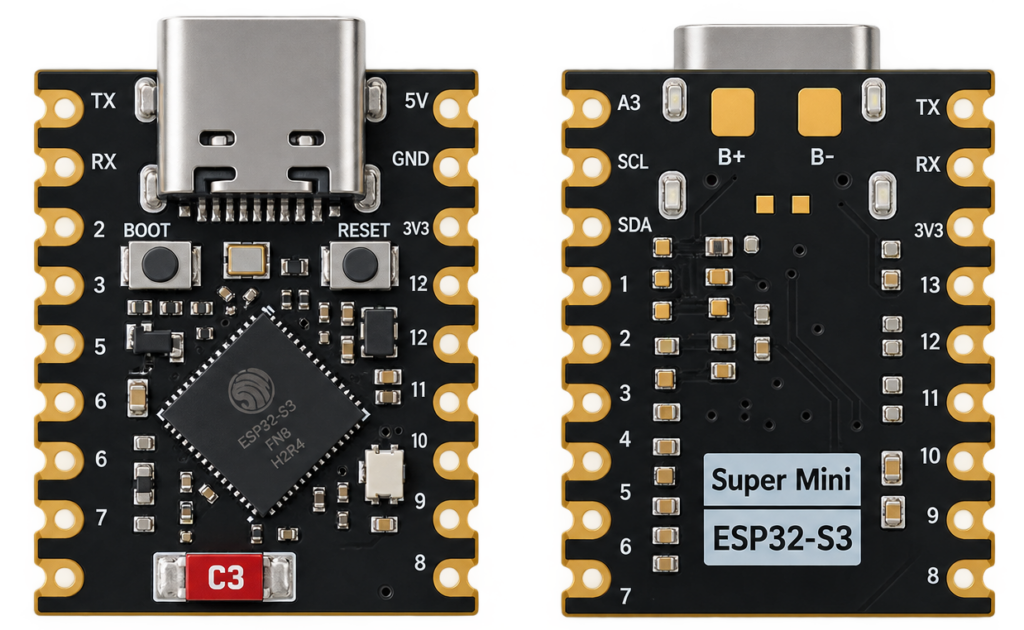
Boards sold as “ESP32-S3 Zero” or “ESP32-S3 Super Mini” are near-identical coin-sized ESP32-S3 breakouts from several sellers, Waveshare’s own ESP32-S3-Zero is the most established and best-documented version, this guide is sourced from Waveshare’s own documentation. If your specific board came from a different seller, double-check its silkscreen labels against the table below before wiring anything, minor differences between clones are common.
System-on-chip and board
Built around the same ESP32-S3 chip as this site’s AI-S3 board: dual-core Xtensa LX7, Wi-Fi 802.11 b/g/n, Bluetooth 5 LE, native USB. This specific board is 23.5×18mm, single USB-C port, an onboard WS2812 addressable RGB LED, a BOOT button, and 4MB flash with 2MB of quad-SPI PSRAM (must be explicitly enabled in firmware, it isn’t used automatically).
GPIO reference
| GPIO | Function | Notes |
|---|---|---|
| 0 | BOOT button | Hold low while connecting USB to enter download mode |
| 1, 2, 4–8, 15–18, 38 | General-purpose, ADC-capable | 12 pins with no boot/system duties, safe first choice for your own wiring |
| 3, 9–14 | Strapping pins | Configure boot behavior at reset, avoid unless you know what you’re changing |
| 21 | WS2812 RGB LED | Onboard, addressable status LED |
| 33–37 | Not exposed | Reserved internally for octal PSRAM, not broken out to a header pin at all on this board |
| 39–42 | JTAG (TCK/TDO/TDI/TMS) | Usable as plain GPIO if you don’t need hardware debugging |
| 43, 44 | UART0 TX/RX | To onboard USB-serial converter |
| 45 | Strapping (flash voltage) | Avoid driving externally at power-on |
Real gotchas
- GPIO33–37 genuinely don’t exist on this board’s header, even though the ESP32-S3 chip itself has them, they’re wired internally to the onboard PSRAM. Don’t design around them being available, unlike some other ESP32-S3 boards that do expose them.
- PSRAM isn’t automatic. The 2MB of onboard PSRAM only becomes usable once your build explicitly enables it (in Arduino IDE: Tools → PSRAM → “OPI PSRAM”; in ESP-IDF: the relevant `menuconfig` option).
- Seller variation. Because “ESP32-S3 Zero” and “ESP32-S3 Super Mini” aren’t a single manufacturer’s trademarked product, always check your specific board’s silkscreen against this table rather than assuming an exact match.
Conclusion
This is the smallest, cheapest way to get a full ESP32-S3 with native USB and PSRAM onto a breadboard. For a larger board with dual USB-C and a built-in USB-serial adapter dedicated purely to flashing, see the AI-S3.
Related
 Reference
MPU6050 Accelerometer + Gyroscope Complete Guide
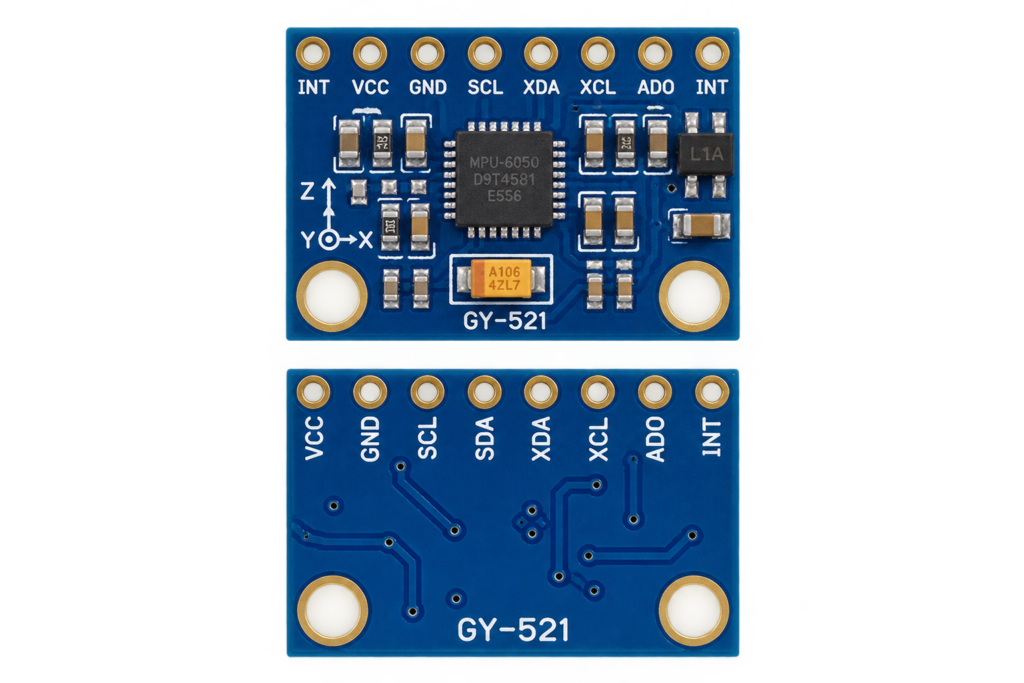
The MPU6050 packs a 3-axis accelerometer and 3-axis gyroscope on one die with an onboard motion-fusion processor, for around the price of a single sensor. This guide covers its real I2C addressing, pinout, and wiring one to an ESP32.
Read more
Reference
MPU6050 Accelerometer + Gyroscope Complete Guide
The MPU6050 packs a 3-axis accelerometer and 3-axis gyroscope on one die with an onboard motion-fusion processor, for around the price of a single sensor. This guide covers its real I2C addressing, pinout, and wiring one to an ESP32.
Read more
 Reference
Guide to the HWFS-1 Anemometer
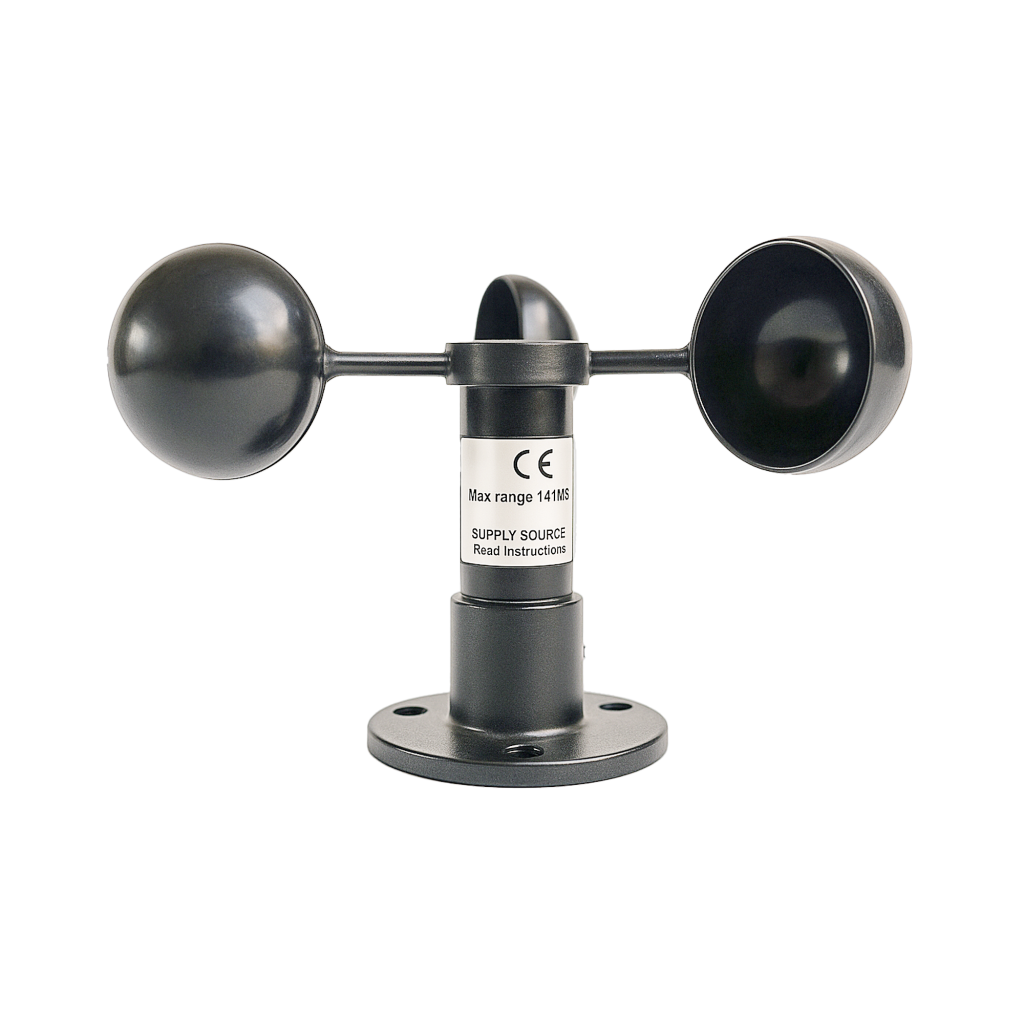
A passive, cup-style wind speed sensor with a built-in voltage generator, no external power needed. This guide covers the analog output, wiring to an ESP32 ADC pin, and the calibration formula to convert voltage into km/h or m/s.
Read more
Reference
Guide to the HWFS-1 Anemometer
A passive, cup-style wind speed sensor with a built-in voltage generator, no external power needed. This guide covers the analog output, wiring to an ESP32 ADC pin, and the calibration formula to convert voltage into km/h or m/s.
Read more
 Reference
The Complete Guide to the RC522 RFID Module
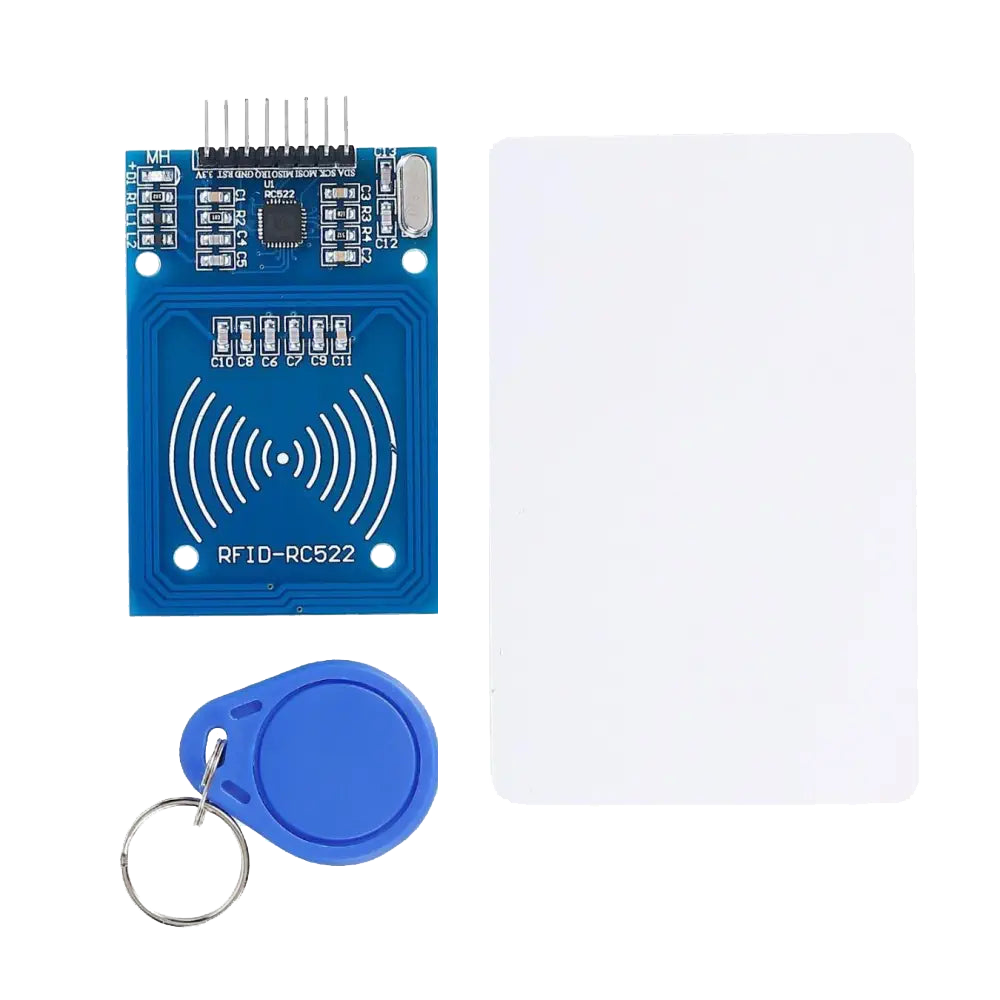
A low-cost 13.56 MHz RFID reader/writer that talks SPI and reads MIFARE cards and key fobs out of the box. This guide covers the pinout, ESP32 wiring, the MFRC522 Arduino library, and where its short read range and UID-cloning risk matter.
Read more
Reference
The Complete Guide to the RC522 RFID Module
A low-cost 13.56 MHz RFID reader/writer that talks SPI and reads MIFARE cards and key fobs out of the box. This guide covers the pinout, ESP32 wiring, the MFRC522 Arduino library, and where its short read range and UID-cloning risk matter.
Read more
More guides
Keep building.
From ESP32 HomeKit accessories to Arduino and ATtiny reference guides, there’s more where this came from.
All guides