
Reference
Your Smart Home in Your Own Hands: Why I Build My HomeKit Accessories Myself
Why I build my HomeKit accessories myself: control over what your device does, no mandatory manufacturer cloud or subscription, more insight into the software, and choosing what is reachable. And the responsibility that comes with it.
- HomeKit
- Matter
- DIY
- Opinion

Almost every day the news tells us that something else has been hacked. A company, an online service or a smart product. Data ends up on the street, cameras turn out to be vulnerable, or devices stop getting security updates. You almost wonder whether you want to connect anything to the internet at all.
But what about the smart accessories we build ourselves? Is a mass-produced product from the shop the better choice, or does building your own have real advantages?
For me the answer starts with one word: control.
You know what you built
As you may know, you can build many smart accessories yourself. Here on StudioPieters.nl you find everything you need to make your own HomeKit accessories with an ESP32. Matter has been added as well, which opens up even more possibilities.
What is nice about that is that you decide what your device does. You choose the parts, the software and the functions. You know which sensor you connected and why you need a certain connection.
Do you only want to measure a temperature and see it in Apple Home? Then you build exactly that. No extra account you are forced to create, and no subscription you need just to see your own measurements.
No needless cloud or subscriptions
With some commercial smart products you buy more than the device. You also get an app, an account and a connection to the manufacturer’s servers. Sometimes paid subscriptions come on top.
That can be convenient, but it also makes you dependent. What happens if the manufacturer stops? If a free feature suddenly becomes paid? Or if the servers are switched off while your device still works perfectly well?
When you build it yourself, you can choose an accessory that works locally, without a separate manufacturer cloud. Your measurements and controls then do not have to pass an external server of the supplier first.
You build something for yourself, without a running bill coming with it automatically.
Apple Home can of course still use Apple services and a home hub for certain functions. But your accessory does not need a cloud platform of its own on top of that.
More insight into the software
With a bought product the inner workings usually stay out of sight. What does the firmware do exactly? Which data is sent? Which connections are made in the background?
With a self-built device and open source software you can get much more insight into that. You can read the code, change settings and leave out functions you do not need.
That is not an absolute guarantee that there is no bug or unwanted function anywhere. A self-built project also uses libraries and underlying software that you probably do not check line by line. But you do have the option to investigate what you use, instead of depending entirely on what a manufacturer tells you about it.
No opaque extra functions because they are commercially interesting, but a device you can keep as simple and clear as possible.
A mass-produced product is an attractive target
There is another difference that is easily forgotten: scale.
Suppose a manufacturer sells hundreds of thousands of the same smart device. Those devices mostly run the same software. If someone finds a vulnerability in it, one discovery can possibly give access to a great many devices.
That makes such a product attractive to attackers. The time they put into their research can pay off big.
A self-built accessory with its own combination of functions is generally a less attractive target for someone who has to investigate that one specific device. There is simply less to gain from scale.
There is an important nuance, though: self-built devices share software too. A bug in a widely used library can affect several projects. And automated attacks make no distinction between a shop product and your ESP32 if you put a vulnerable service directly on the internet.
Being less attractive as an individual target is therefore an advantage, but it does not replace security.
Choose what is reachable
In my own projects I want as few unnecessary ways in as possible.
Does a sensor not need an admin page? Then it does not get one. Do I want to update over USB? Then the wireless update function can stay out. Does the device not need an external service? Then I do not need to add that connection either.
For control away from home you use the features of Apple Home and the home hub. You do not have to open a router port to your ESP32 for that.
That keeps the project understandable. You know which functions are present and which parts need maintenance.
Control also means responsibility
Building your own gives freedom, but that freedom needs attention. You are responsible for updates, good settings and handling passwords and pairing codes with care.
HomeKit offers secure pairing and encrypted communication. An extra web server or wireless update function you have to secure separately.
That is why a successful project is more than a working schematic and a nice enclosure. The software has to be maintained as well. An accessory that works well today still deserves attention every now and then later.
I think that is a fair trade: I take on the maintenance, and in return I get control over my own device.
Get started yourself
For me that is the strength of building your own. You make something that fits your home and your wishes. Without unnecessary functions, without a mandatory manufacturer cloud and without a subscription for something your device can do by itself.
You also learn how it works. You do not just plug in a box, you understand more and more of what happens behind that button in Apple Home.
Do you want to try it too? Here on StudioPieters.nl you find projects and explanations to build your own HomeKit accessories with an ESP32 (start with ESP32 HomeKit Development). And with the addition of Matter the possibilities have grown further.
Your smart home does not have to depend entirely on the choices of a manufacturer. You can make those choices yourself.
Related
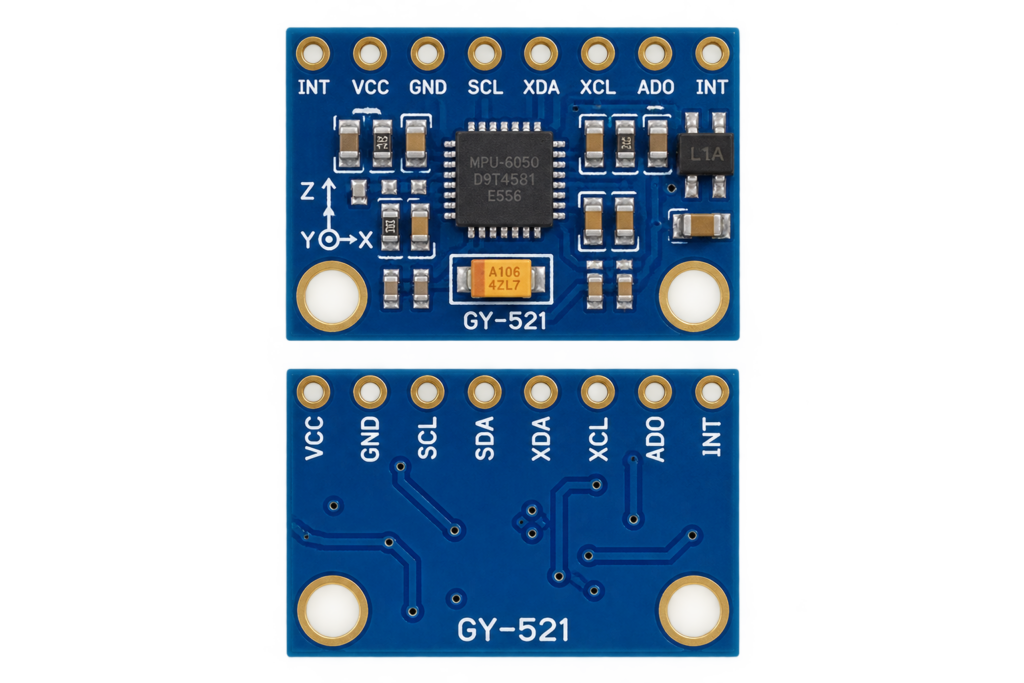 Reference
MPU6050 Accelerometer + Gyroscope Complete Guide
The MPU6050 (GY-521) six-axis motion sensor: real specifications, pins, I2C addresses, wiring, code with raw registers, calibration, and the traps that give drifting readings.
Read more
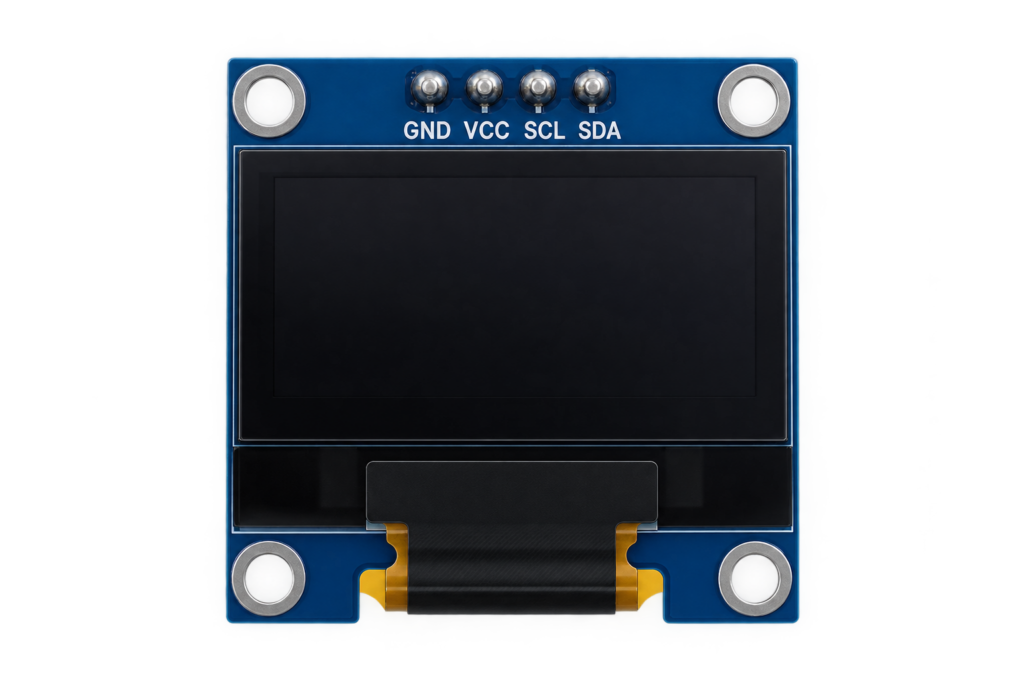 Reference
SSD1306 OLED Display
A tiny, self-illuminating I2C display for turning a headless ESP32 project into something readable at a glance. Covers the SSD1306 vs SH1106 offset trap, how the page-based framebuffer works, and avoiding burn-in.
Read more
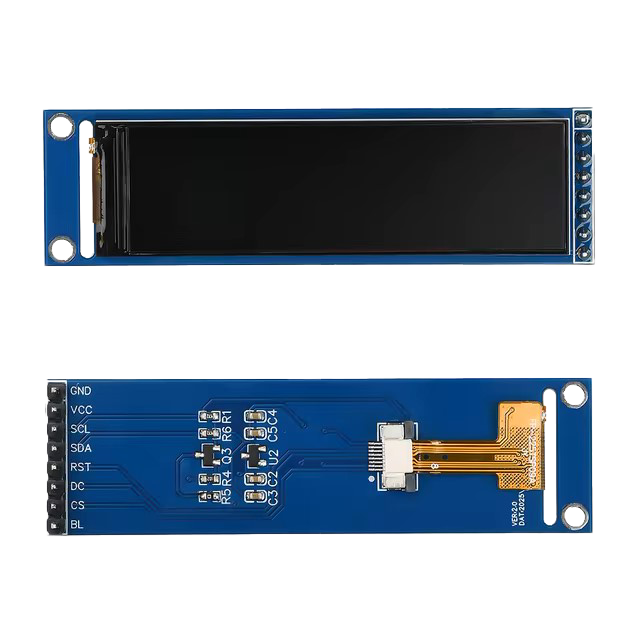 Reference
2.25 inch TFT LCD ST7789 SPI Display
A compact 128 x 400 IPS display driven by the ST7789 controller over a 4-wire SPI bus. This guide covers the pinout, ESP32 wiring, and Arduino code using the Adafruit ST7789 library.
Read more
More guides
Keep building.
From ESP32 HomeKit accessories to Arduino and ATtiny reference guides, there’s more where this came from.
All guides