
Reference
The Complete Guide to the HLK-LD2450 24GHz Multi-Target Tracking Radar Module
The LD2450 is Hi-Link's multi-target mmWave radar: where the already-published LD2410 only tells you someone is present, the LD2450 tracks up to three people at once with real X/Y position and speed. This guide covers its real UART protocol, wiring, and when you actually need position tracking over simple presence.
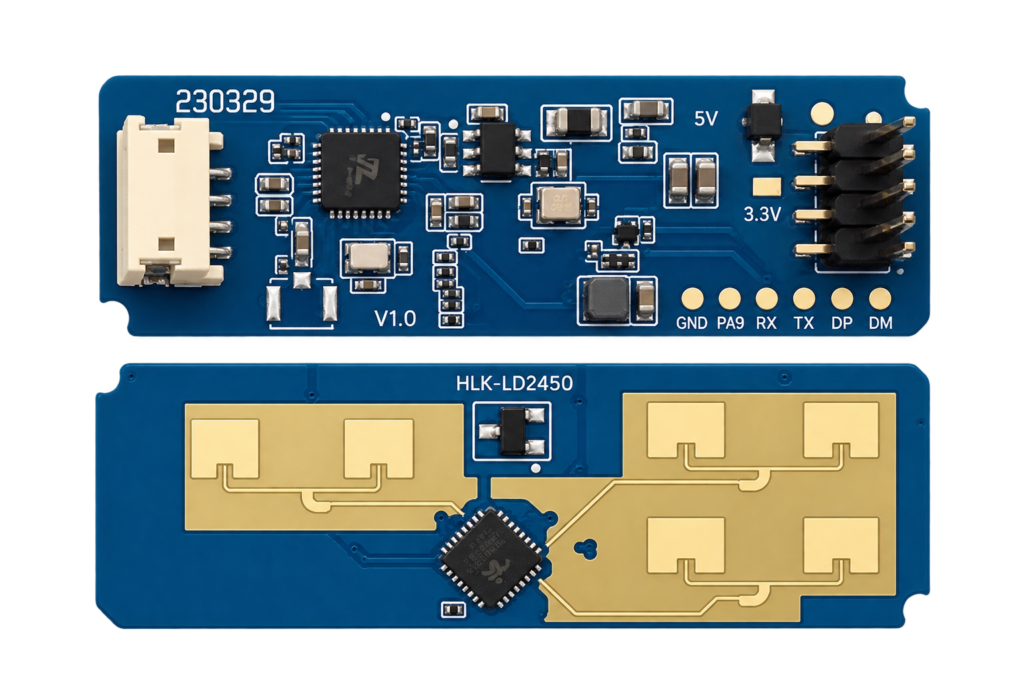
The HLK-LD2450 is a 24GHz FMCW (frequency-modulated continuous-wave) millimeter-wave radar module from Shenzhen Hi-Link, the sibling of the already-published HLK-LD2410. Where the LD2410 answers a yes/no “is someone there” question, the LD2450 tracks up to three separate moving targets simultaneously, each with its own X/Y coordinate and speed, streamed continuously over UART.
LD2410 or LD2450: which do you need?
| LD2410 | LD2450 | |
|---|---|---|
| Reports | Presence + rough distance gate, single zone | X/Y position + speed, per target, up to 3 targets |
| Best for | “Turn on the light when someone’s in the room” | “Where in the room is each person, and are they moving” |
| Output | Simple presence/distance frames | Binary coordinate frames per target, 10 frames/sec |
If you only need occupancy detection, the simpler LD2410 is cheaper and easier to integrate. Reach for the LD2450 when you need to know where someone is in a room, count multiple people, or detect direction of movement.
Specifications and Pinout
| Spec | Value |
|---|---|
| Frequency band | 24GHz–24.25GHz (FMCW) |
| Power supply | 5V DC, >200mA |
| Detection range | ~6m |
| Detection angle | ±60° |
| Data refresh rate | 10Hz (10 frames/second) |
| Max simultaneous targets | 3 |
| UART baud rate (fixed) | 256000, 1 stop bit, no parity |
| Pin | Function |
|---|---|
| VCC | 5V |
| GND | Ground |
| TX | Radar’s UART transmit → MCU RX |
| RX | Radar’s UART receive ← MCU TX |
| OT1 | Optional presence output pin (open-drain) |
Wiring to an ESP32
The module needs a genuine 5V supply (not 3.3V) but its UART logic level is 3.3V-safe for direct connection to an ESP32’s hardware UART. Cross TX/RX between the two devices.
| LD2450 Pin | ESP32 Pin |
|---|---|
| VCC | 5V (VIN) |
| GND | GND |
| TX | GPIO16 (RX2) |
| RX | GPIO17 (TX2) |
Arduino code (HLK-LD2450 library by RBEGamer)
#include <HardwareSerial.h>
#include <LD2450.h>

HardwareSerial radarSerial(2);
LD2450 radar;

void setup() {
  Serial.begin(115200);
  radarSerial.begin(256000, SERIAL_8N1, 16, 17);
  radar.begin(radarSerial);
}

void loop() {
  radar.read();
  for (int i = 0; i < 3; i++) {
    if (radar.getTargetActive(i)) {
      Serial.printf("Target %d: x=%dmm y=%dmm speed=%dcm/sn",
        i, radar.getTargetX(i), radar.getTargetY(i), radar.getTargetSpeed(i));
    }
  }
  delay(100);
}
The exact method names vary slightly between the several community LD2450 libraries (RBEGamer/HLK-LD2450, darkjumpy/HLK-LD2450_Arduino_Library, Fiooodooor/HLK-LD245X all exist), check the specific library’s own examples, the wiring and 256000-baud UART protocol are the same regardless of which one you pick.
Practical Applications
- Room occupancy counting: track up to 3 people moving through a space.
- Smart lighting zones: turn on only the light near the tracked X/Y position, not the whole room.
- Fall/motion-pattern detection: speed and position data over time can flag unusual movement.
- Privacy-preserving presence: no camera involved, useful where a camera would raise privacy concerns.
Conclusion
The LD2450 gives you real multi-target position tracking that a simple presence sensor like the LD2410 can’t, at the cost of a more involved binary UART protocol. Pair it with an ESP32’s hardware UART for reliable 256000-baud framing.
Related
 Reference
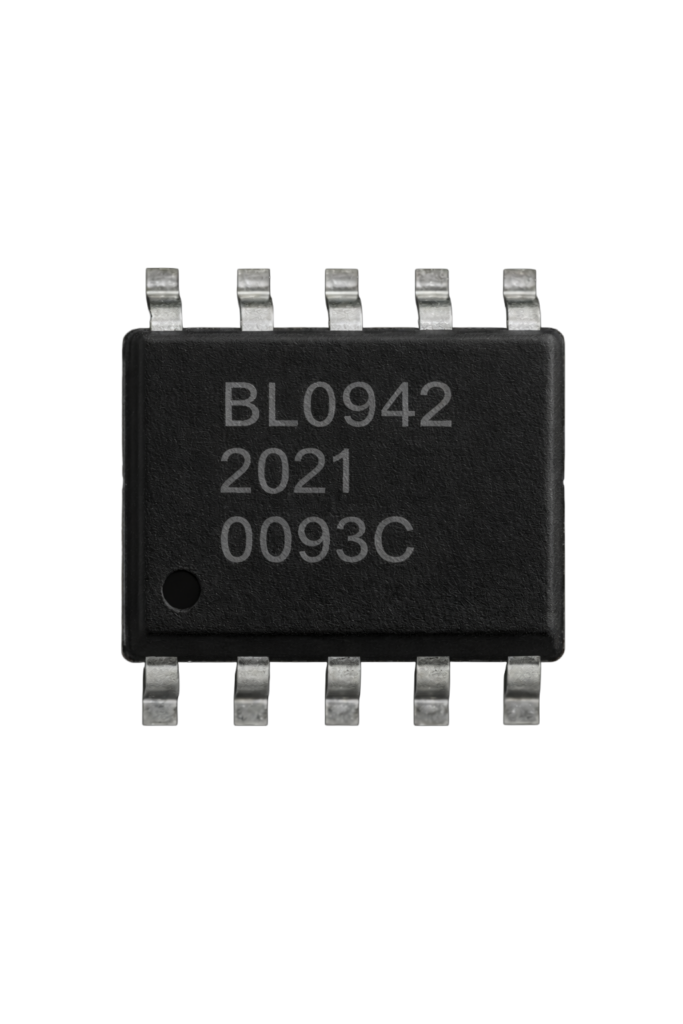
The Ultimate Guide to the BL0942 Energy Meter IC
A calibration-free, register-driven single-phase energy metering IC: active power, RMS, line frequency and zero-crossing, all exposed over UART or SPI instead of pulse-counting alone. This guide covers its pinout, digital interfaces, and how it compares to the older BL0937.
Read more
Reference
The Ultimate Guide to the BL0942 Energy Meter IC
A calibration-free, register-driven single-phase energy metering IC: active power, RMS, line frequency and zero-crossing, all exposed over UART or SPI instead of pulse-counting alone. This guide covers its pinout, digital interfaces, and how it compares to the older BL0937.
Read more
 Reference
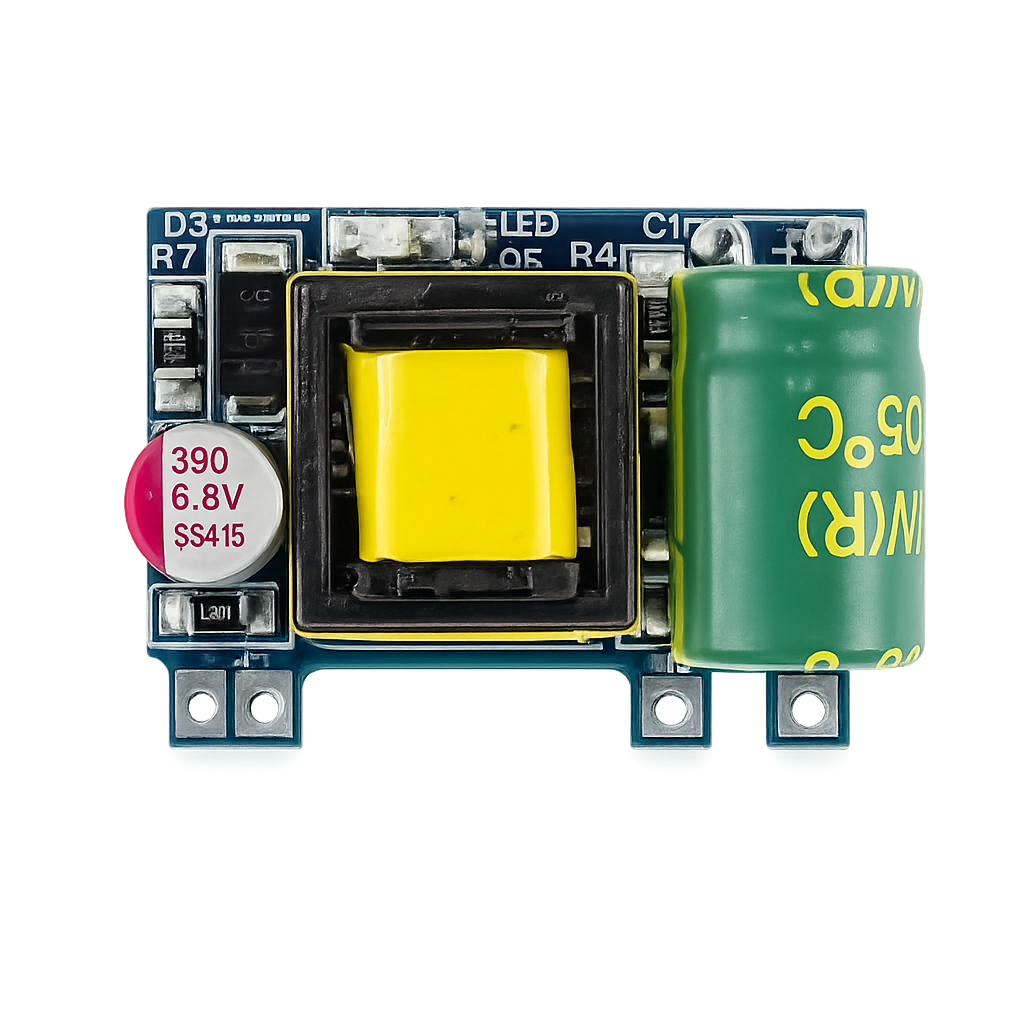
JL-AD3W-HT-V3 – Everything You Need to Know About This AC-DC Power Supply Module
A compact, mains-connected switch-mode power module that converts AC directly into a regulated 5V DC output, popular in low-cost embedded electronics. This guide covers its electrical specs, pinout, output filtering, and the mains-safety rules that come with using bare board-mount SMPS hardware.
Read more
Reference
JL-AD3W-HT-V3 – Everything You Need to Know About This AC-DC Power Supply Module
A compact, mains-connected switch-mode power module that converts AC directly into a regulated 5V DC output, popular in low-cost embedded electronics. This guide covers its electrical specs, pinout, output filtering, and the mains-safety rules that come with using bare board-mount SMPS hardware.
Read more
 Reference
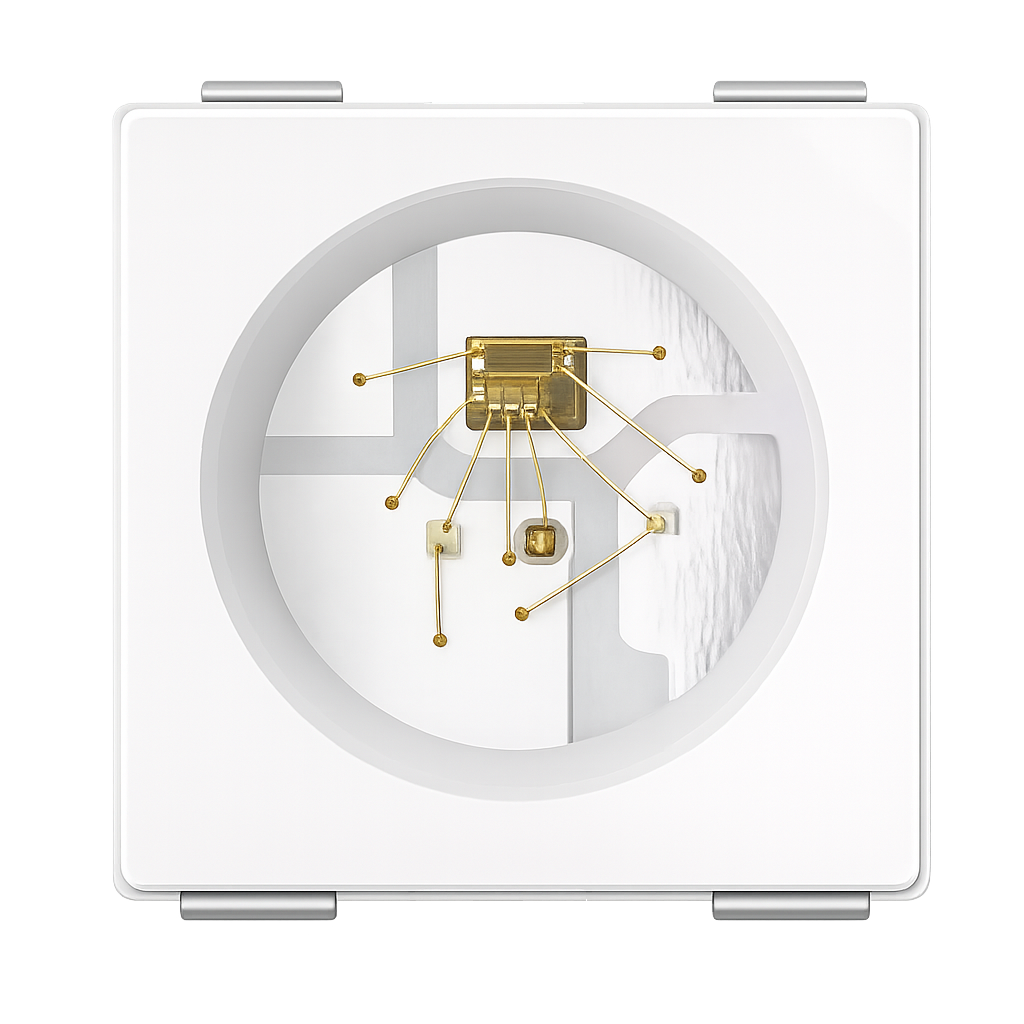
NeoPixels (WS2812B) – Complete Guide
Individually addressable RGB LEDs that need just one data pin to control hundreds of LEDs, each with its own 24-bit color. This guide covers the WS2812B family, wiring to an ESP32-C6 SUPER MINI, power budgeting, and ESP-IDF/Arduino example code.
Read more
Reference
NeoPixels (WS2812B) – Complete Guide
Individually addressable RGB LEDs that need just one data pin to control hundreds of LEDs, each with its own 24-bit color. This guide covers the WS2812B family, wiring to an ESP32-C6 SUPER MINI, power budgeting, and ESP-IDF/Arduino example code.
Read more
More guides
Keep building.
From ESP32 HomeKit accessories to Arduino and ATtiny reference guides, there’s more where this came from.
All guides