
Reference
SCD40 / SCD41 CO2 Sensor Complete Guide
The SCD40 and SCD41 measure actual CO2 concentration using photoacoustic NDIR sensing, something a temperature/humidity sensor like the BME280 or SHT series cannot do at all. This guide covers both chips' real specs, wiring one to an ESP32, and the common beginner mix-up between CO2 sensing and air-quality/humidity sensing.
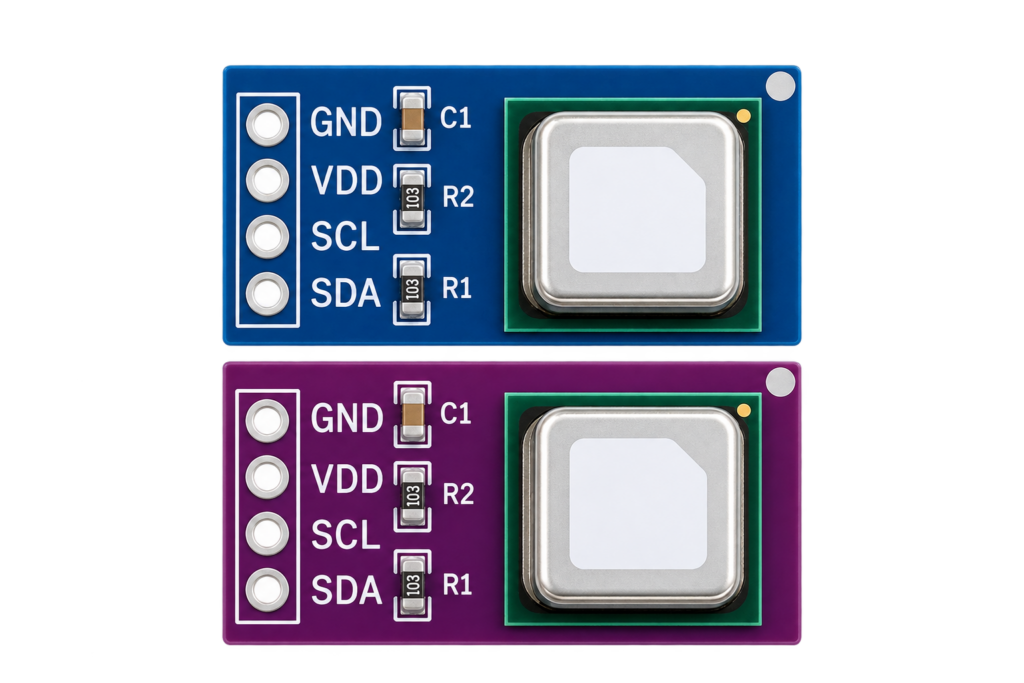
The SCD40 and SCD41 are true CO2 sensors from Sensirion, measuring carbon dioxide concentration in parts-per-million using photoacoustic NDIR (non-dispersive infrared) sensing, alongside onboard temperature and humidity measurement. This is a genuinely different measurement principle from the already-published BME280 or SHT series, a common beginner mix-up worth stating directly: neither the BME280 nor any SHT sensor measures CO2, they measure temperature, humidity and (for the BME280) barometric pressure, none of which is a substitute for real CO2 sensing.
SCD40 vs. SCD41: real differences
| SCD40 | SCD41 | |
|---|---|---|
| CO2 accuracy | ±50ppm | ±40ppm |
| Low-power single-shot mode | No | Yes |
| Best for | Continuously-powered monitors (e.g. a wall-plugged CO2 traffic-light indicator) | Battery-powered or duty-cycled monitors, thanks to its single-shot low-power mode |
Both share the same I2C address (0x62) and command set, so code written for one runs on the other. Pick the SCD41 specifically if you need battery-friendly, infrequent readings, otherwise the SCD40 is the cheaper option for an always-powered monitor.
Pinout
| Pin | Function |
|---|---|
| VDD | Power, 2.4V–5.5V |
| GND | Ground |
| SDA | I2C data |
| SCL | I2C clock |
Both chips need a brief warm-up after power-on and periodic recalibration against known-good outdoor air (~400–420ppm) for long-term accuracy, both handled automatically by their default automatic self-calibration (ASC) unless disabled.
Wiring to an ESP32
| SCD4x Pin | ESP32 Pin |
|---|---|
| VDD | 3.3V |
| GND | GND |
| SDA | GPIO21 |
| SCL | GPIO22 |
Arduino code (SparkFun SCD4x library)
#include <Wire.h>
#include <SparkFun_SCD4x_Arduino_Library.h>

SCD4x co2Sensor;

void setup() {
  Serial.begin(115200);
  Wire.begin(21, 22);
  if (!co2Sensor.begin()) {
    Serial.println("Couldn't find SCD4x sensor");
    while (1) delay(10);
  }
}

void loop() {
  if (co2Sensor.readMeasurement()) {
    Serial.print("CO2 (ppm): ");
    Serial.print(co2Sensor.getCO2());
    Serial.print("  Temp (C): ");
    Serial.print(co2Sensor.getTemperature());
    Serial.print("  Humidity (%RH): ");
    Serial.println(co2Sensor.getHumidity());
  }
  delay(5000); // the sensor itself only produces a new reading every 5s
}
Install “SparkFun SCD4x Arduino Library” via the Arduino Library Manager, or Sensirion’s own “Sensirion I2C SCD4X” library. Note there is no first-party Adafruit Arduino library for this chip, only a CircuitPython driver, if you were expecting one by analogy with Adafruit’s other sensor libraries.
Practical Applications
- Indoor air quality monitoring: CO2 buildup is a genuine, well-studied proxy for how stale/poorly-ventilated a room is.
- Demand-controlled ventilation: only run an extractor fan or HRV when CO2 actually rises.
- Meeting-room/classroom monitors: a common, practical use case for this exact chip.
- Greenhouse CO2 supplementation control: closing the loop on CO2 enrichment for plant growth.
Conclusion
If a project genuinely needs CO2 data, the SCD40/SCD41 are the real thing, not a proxy inferred from humidity or temperature. Either pairs cleanly with an ESP32 over I2C alongside a BME280 for a complete air-quality picture.
Related
 Reference
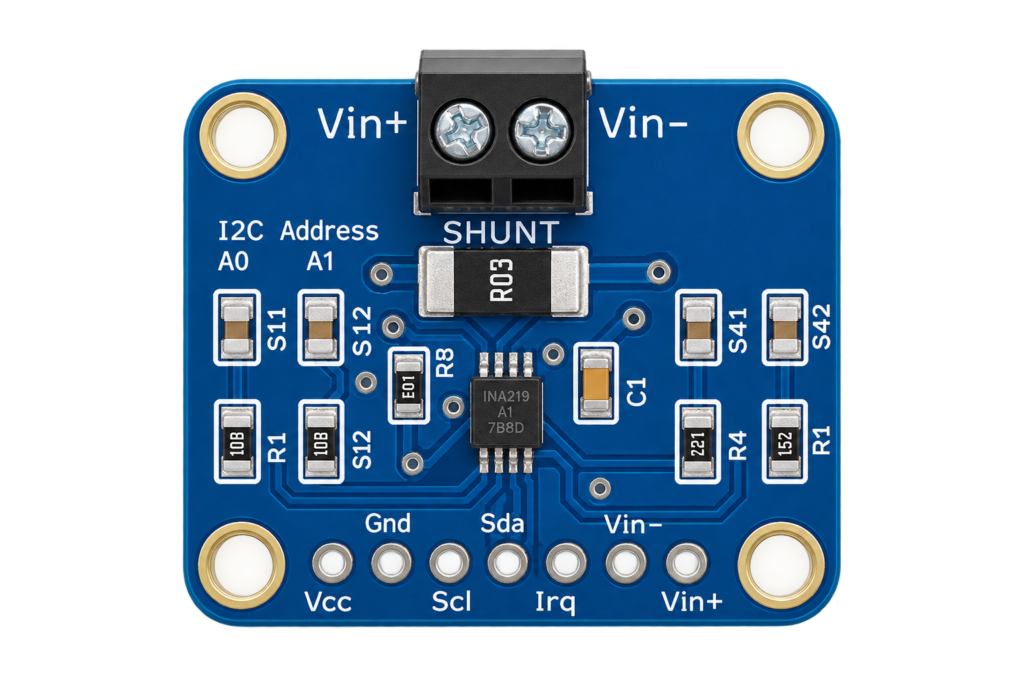
INA219 / INA226 Voltage, Current and Power Sensor Complete Guide
The INA219 and INA226 measure voltage, current and power on a low-voltage DC bus over I2C, using a shunt resistor and Ohm's law, not the mains-AC energy-meter ICs this site already covers. This guide covers both chips' real specs, wiring one to an ESP32, and which to pick for a battery or power-budget project.
Read more
Reference
INA219 / INA226 Voltage, Current and Power Sensor Complete Guide
The INA219 and INA226 measure voltage, current and power on a low-voltage DC bus over I2C, using a shunt resistor and Ohm's law, not the mains-AC energy-meter ICs this site already covers. This guide covers both chips' real specs, wiring one to an ESP32, and which to pick for a battery or power-budget project.
Read more
 Reference
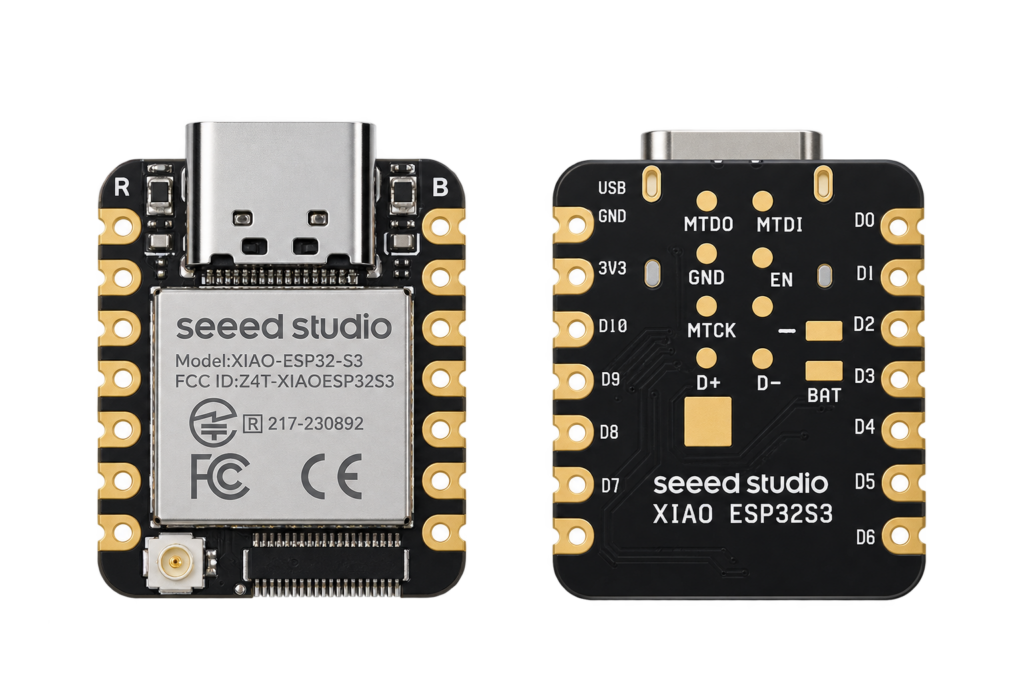
Seeed Studio XIAO ESP32S3 Pinout
The real pin reference for Seeed Studio's XIAO ESP32S3: thumbnail-sized, native USB, with a camera/display connector on the Sense variant.
Read more
Reference
Seeed Studio XIAO ESP32S3 Pinout
The real pin reference for Seeed Studio's XIAO ESP32S3: thumbnail-sized, native USB, with a camera/display connector on the Sense variant.
Read more
 Reference
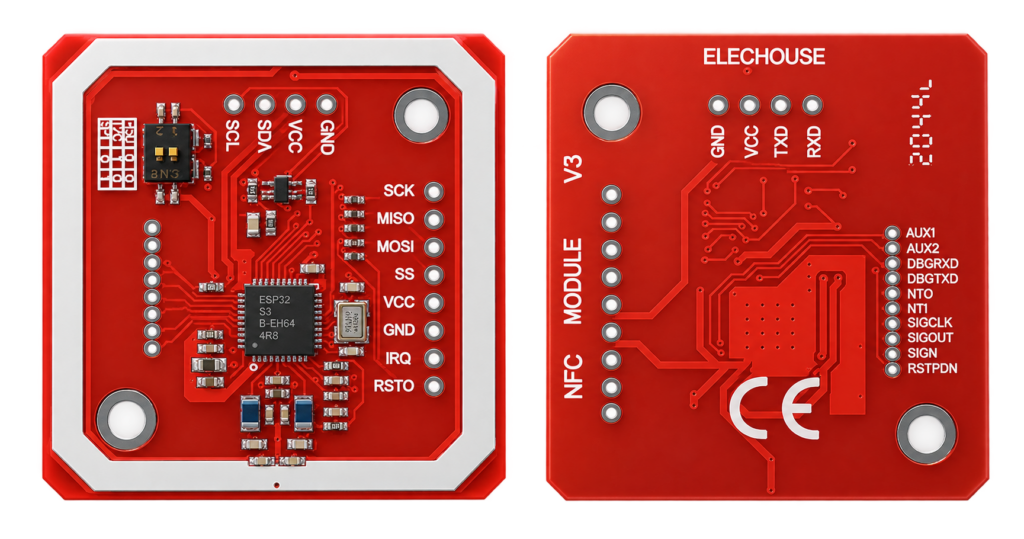
PN532 NFC Module Complete Guide
The PN532 reads and writes NFC tags, including the kind your phone already uses for tap-to-pay and tap-to-share, not just the 13.56MHz RFID cards the already-published RC522 handles. This guide covers its three interfaces, wiring it to an ESP32 over I2C, and when you actually need NFC over plain RFID.
Read more
Reference
PN532 NFC Module Complete Guide
The PN532 reads and writes NFC tags, including the kind your phone already uses for tap-to-pay and tap-to-share, not just the 13.56MHz RFID cards the already-published RC522 handles. This guide covers its three interfaces, wiring it to an ESP32 over I2C, and when you actually need NFC over plain RFID.
Read more
More guides
Keep building.
From ESP32 HomeKit accessories to Arduino and ATtiny reference guides, there’s more where this came from.
All guides